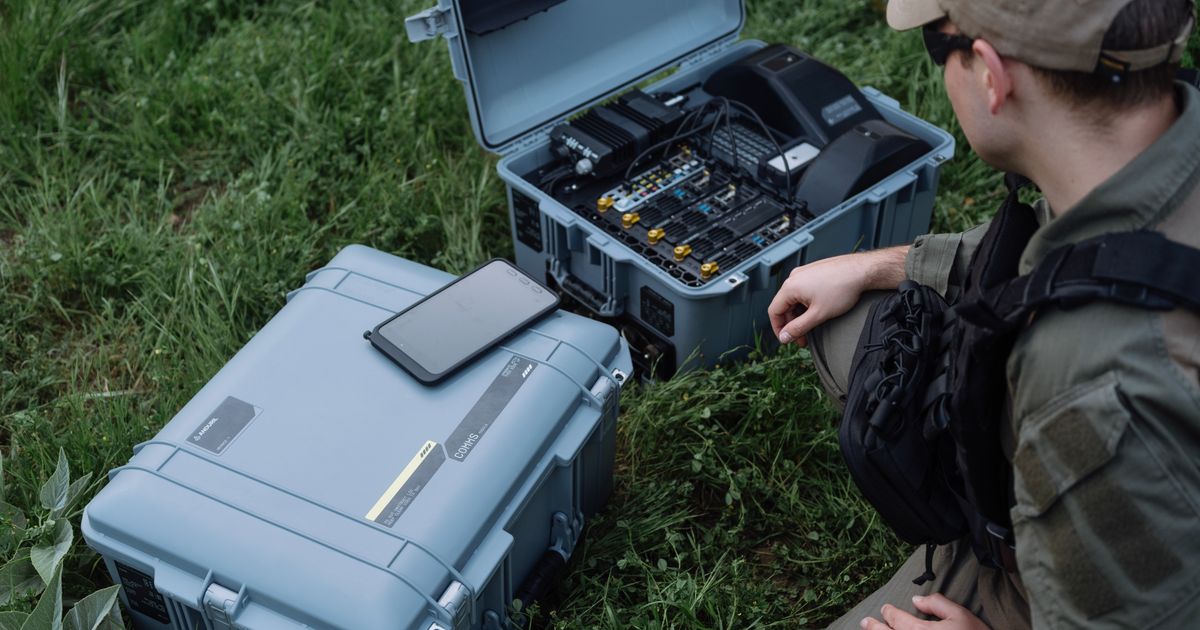
Anduril Menace field command-and-control system
Attention Deficit / Episode 003 / Defense Tech

Defense tech,
from the stack down.

Software now connects the sensors, vehicles, weapons, and people involved in war. This story starts with how those systems work, then follows the companies and people building them.

Inside the industryTechnology → products → money → people → politics
Image: Anduril Menace-T

Start with how the technology works.

Today’s defense companies sell sensors, autonomous vehicles, AI software, data systems, and weapons designed to be updated through software. The important change is how these pieces connect: what a system detects, how it identifies an object, and what action follows.

Before looking at the founders and politics, look at the data: what enters the system, who can change it, and what action it can trigger.

Put the numbers in context.

Comparable facts, dated July 30, 2026. Private value and public market value remain labeled separately.

COMPANY / OWNERSHIPAGEEMPLOYEESCOMPANY VALUE
Palantirpublic software company
23 yrs
4,429
$314B
Andurilprivate defense company
9 yrs
~8,000
$61B
Lockheed Martinpublic defense prime
31 yrs*
121,000
$132B
General Dynamicspublic defense prime
74 yrs
>110,000
$103B
Northrop Grummanpublic defense prime
87 yrs*
97,000
$76B

What stands out: Palantir has about 3.7% of Lockheed’s workforce and 2.4 times its market value. Anduril has about 6.6% of Lockheed’s workforce. Its latest private valuation is roughly equal to Ford’s $59B market cap.

*Lockheed Martin age starts at the 1995 merger; Northrop starts at Jack Northrop’s 1939 company. Market caps move daily. Anduril’s orange bar is its May 2026 post-money private valuation, not a live public price.

Sources and methodology

Anduril Series H: $5B raised at a $61B post-money valuation.

Anduril headcount: Forbes reported about 8,000 employees in May 2026.

Palantir 2025 10-K: 4,429 full-time employees at year end.

Lockheed Martin: about 121,000 employees and $75B in 2025 sales.

General Dynamics: more than 110,000 employees and $52.6B in 2025 revenue.

Defense peer table: General Dynamics’ proxy reports 121,000 Lockheed, 97,000 Northrop, and 117,000 General Dynamics employees from annual filings.

Anduril Army vehicle: up to $20B over 10 years. The first reported order was $87M.

Palantir Army agreement: eligible agencies may purchase products over 10 years, not to exceed the $10B cap.

Public market caps at July 30, 2026 close: Palantir, Lockheed Martin, General Dynamics, Northrop Grumman, and Ford.

Lattice C2: vendor description of one operator supervising hundreds of systems.

How data becomes action.

The products are different, but they solve parts of the same problem: collect data from the world, identify what it represents, decide what matters, and send instructions to a person or machine.

SenseVideo, radar, satellites, telemetry, case records.
ResolveWhich tracks, faces, rows, and addresses refer to the same object?
ModelOntology: person, target, vehicle, unit, site, supplier.
DecideConfidence, route, target queue, plan, recommendation.
ActHuman team, drone, interceptor, robot ship, administrative workflow.

Palantir organizes data and operational workflows. Anduril connects sensors and autonomous machines. Shield AI builds autonomous pilots. Hadrian automates manufacturing. Saronic builds autonomous naval vessels. SpaceX supplies launch, communications, and satellites.

When does a detection become a decision to act, and who can stop it?

The software connects the weapons.

The pitch is bigger than a better drone. These companies want one software layer to combine data from many sensors, coordinate many machines, and keep working when communications are limited.

What are buyers actually paying for?

Select a company to compare its product, advantage, customers, and public contracts. Most defense systems are configured for a program, so companies rarely publish a unit price.

The military is buying software that connects surveillance, planning, and weapons. AI is one part of that system.

The frontier is physical again.

The most ambitious technology is moving out of the browser and into air, factories, orbit, oceans, and power systems. Defense is one customer, not the whole story. The shared stack is propulsion, batteries, autonomy, simulation, advanced materials, and factories built to learn from every machine they ship.

Deployed Testing or demonstrated In development
The breakthrough is the loop, not one machine.

A real deployment produces the examples a simulation misses: a shifted part, turbulent air, damaged terrain, a hot reentry, a weak network. Teams feed those failures back into software and hardware, then manufacture the next revision. Defense accelerates that loop with money and urgency. Civilian markets can spread the result.

Why now: speed, Ukraine, China.

Pentagon purchasing is slow. Ukraine showed how cheap drones, electronic warfare, and frequent software updates can change battlefield economics. China can build ships and other military hardware at a scale the United States cannot easily match.

200×Frequently cited estimate for China’s commercial shipbuilding capacity versus the U.S.; capacity is not the same as naval combat power.
<1 minAnduril reports a sensor-to-shooter workflow under one minute in a 2025 Army exercise.
$54.6BReported FY2027 autonomous-warfare request tied to the Defense Autonomous Warfare Group.
The United States is betting that software and autonomy can offset an industrial disadvantage.

The technical problem: jamming and network delays make constant remote control unreliable. Some decisions have to happen on the vehicle itself. “Human in the loop” therefore has to be defined as a specific system requirement: which decisions need approval, from whom, and under what network conditions?

What each number does and does not prove

Shipbuilding capacity measures commercial industrial capacity, not a direct 200-to-1 naval comparison.

Ivy Sting is an Anduril account of a live-fire exercise and should be identified as a vendor claim.

DAWG request is a budget direction, not deployed capability.

The same people keep showing up.

A relatively small group of founders, investors, former employees, advisers, and government officials appears across these companies. The graph shows the documented connection behind each line.

A useful starting path is Anduril → Trae Stephens → Founders Fund → Palantir. Then filter to “Revolving door.” Distance on the graph does not prove a relationship; the labeled connection and its source do.

Before defense tech, there was PayPal and the Stanford Review.

The Stanford Review brought several people in this network together before the companies existed. PayPal later gave them money, operating experience, and relationships. Palantir applied those resources to government software.

Trae Stephens

The connector.

Stephens worked as an engineer at Palantir, became a partner at Founders Fund, co-founded Anduril, and advised the 2016 defense transition. His career connects the product, its investors, and government.

Open profile and source ↗
This is not evidence of a conspiracy. It shows how often the same investors, employees, advisers, and officials appear across the industry.

The harder questions come after the ethics debate.

The question is not only whether military technology is good or bad. It is also how autonomous weapons change military service, political accountability, and the relationship between citizens and war.

If fewer people fight, what counts as service?

Autonomy is partly a promise to put fewer people in direct danger. But military service has also been a public ritual: a uniform, an oath, a chain of command, and the possibility of shared sacrifice. The work is now spreading across three very different roles.

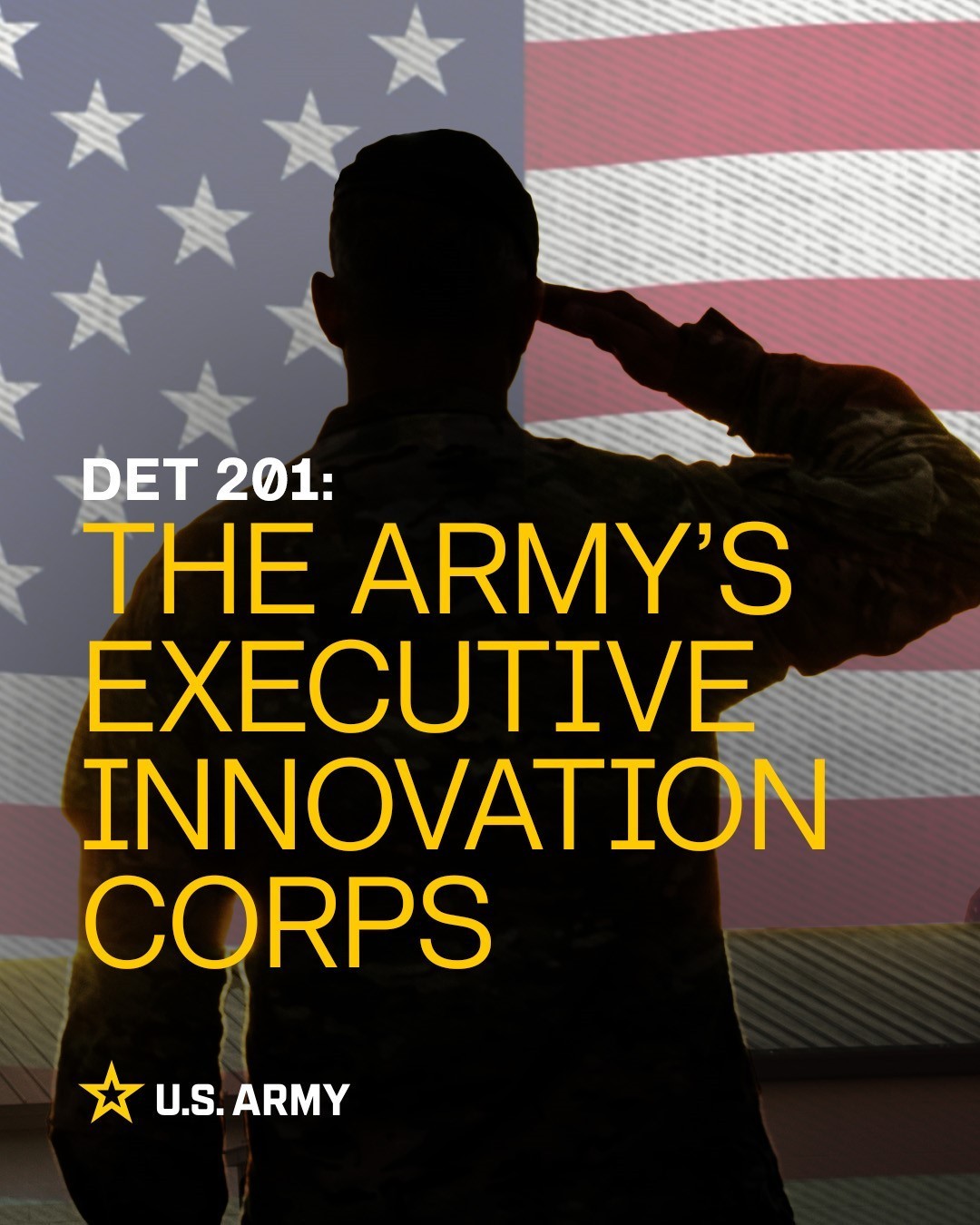
U.S. Army artwork for Detachment 201, the Executive Innovation Corps
DETACHMENT 201 / DIRECT COMMISSION

The officers who kept their day jobs.

In 2025, the Army commissioned four technology leaders directly as Reserve lieutenant colonels. They serve part-time as senior advisers without leaving their civilian careers. Select an officer to see both roles at once.

2025 / THE OPEN QUESTIONEarly reporting questioned whether officers with financial interests in technology companies would be recused from related defense business.
2026 / THE CONTROLThe Army later said disclosure, ethics training, legal review of each task, mandatory recusal, and separation from vendor selection were required.

When the same person is an executive and an officer, which duty governs the work?

Army launch · Army second cohort · Guardrails reporting · Artwork: U.S. Army

THE BODYSoldierServes under military law and carries physical risk. Service is public and legible.
THE DECISIONOperatorSupervises machines and authorizes actions, often at greater distance from danger.
THE SYSTEMEngineerBuilds through a private employer, may hold equity, and may never enter a war zone.
What happens to patriotism when the soldier is no longer the center of the story?

If defense depends more on machines and private engineers, the country gains distance from battlefield loss. It may also lose the shared act that once made war personal to the public.

Who carries the moral burden?

Distance may protect an operator from physical danger, but it does not make responsibility disappear. Does that burden move to intelligence analysts and engineers, or become divided among so many people that no one feels responsible?

Does automation make war easier to choose?

Remote weapons reduce the danger to one’s own soldiers. They may also reduce the domestic political cost of using force.

Does building weapons count as service?

Engineers can now affect national defense without joining the military. But they work for private companies, earn equity, and may have more influence than the citizens who authorize the use of force.

Who gets to say no?

The answer could be an operator, an engineer, a contract, a military rule, or a court. A safeguard only works if the right person can use it before the system acts.

Can a democracy keep meaningful control over force when the weapons are remote, increasingly autonomous, and built by private companies?

Democratic control is a technical requirement.

Defense tech is software with physical consequences. It should be reviewed like any high-risk system: what goes in, what comes out, who benefits, how it fails, and who can stop it.